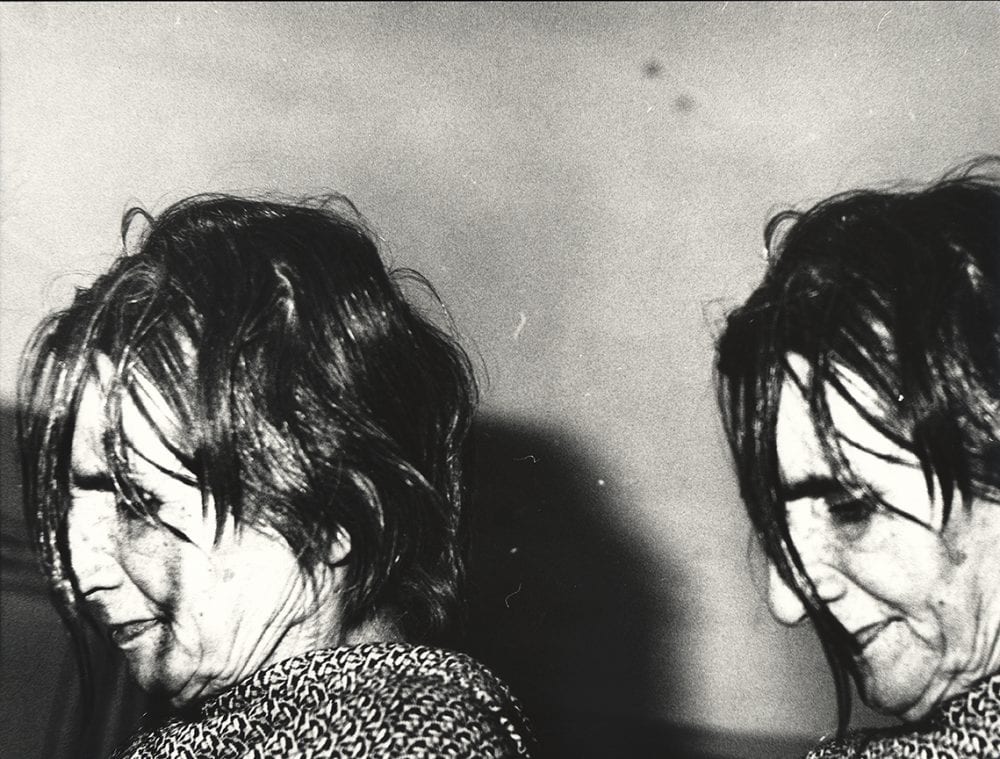
E io ti vidi fanciulla (And I saw you as a girl) is set in the hospice in Senigallia. Giacomelli explores the emotions of one elderly woman, abandoned and alone. The series was compiled in 1993/4 with photographs from 1954/56.
At the hospice, Giacomelli immersed himself in the ideas that were troubling him: death, loneliness, love and loss. By photographing at the hospice, Giacomelli maintained a strong link to the figure of his mother, Libera, who worked there as a laundress after the premature death of her husband. From the early 1930s, Giacomelli accompanied his mother to the hospice and sat to eat his soup while she worked.
The title is Giacomelli’s affirmation of time’s incessant forward trajectory, which causes missed moments to slip by. The series’ title is powerfully oxymoronic: the phrase E io ti vidi fanciulla (And I saw you as a girl) (which seems like the continuation of a tender familial conversation) contrasts with the protagonist’s naked and exposed body, utterly alone, untempered by words, and captured in the harsh light of the camera flash.
Interviewed in 1980 by AC Quintavalle about his series of Nudes (1956/60), Giacomelli described how his idea for the nudes came from the hospice, how the body of an elderly person holds a story to be told, how it harbours the bitterness of that which has been lost, perhaps without ever having been enjoyed.
‘Turroni was acutely aware of how Vita d’ospizio (Hospice life) centred around “the drama of human nature, destined to disappear after the full flush of youth.”’
(M Andreani in Mario Giacomelli. Giacomo Leopardi, L’infinito, A Silvia, Silvana Editoriale, 2019)